

CORN
PAGE CONTENTS
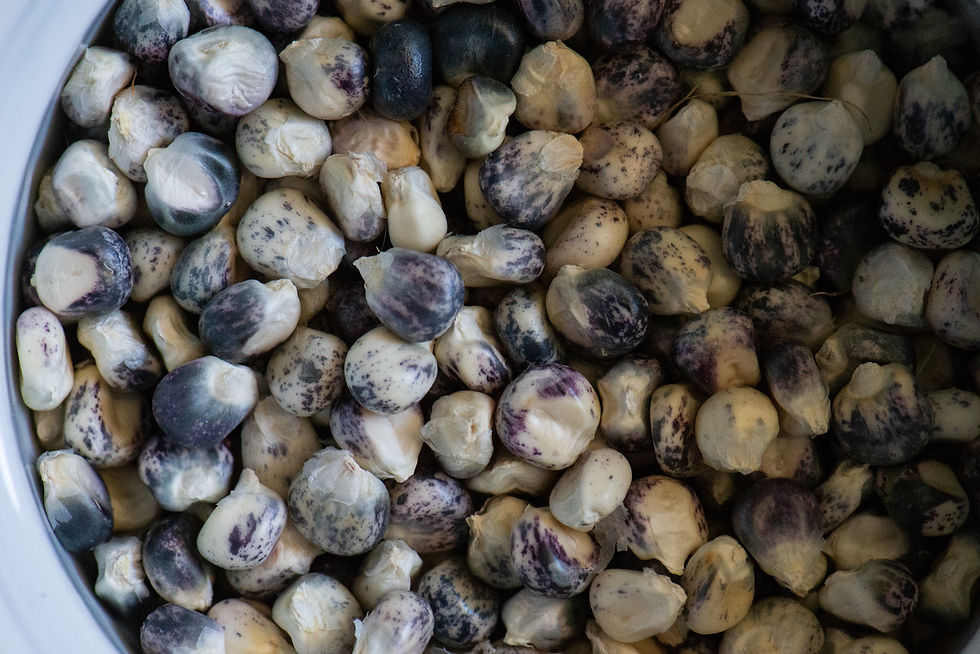
Navajo Robin's Egg
Developed in the arid southwest by Dine people. This variety is nearly dwarf (3-4' tall), super drought tolerant, and matures in a short growing season. The kernels are relatively soft and easy to grind for a flour corn.
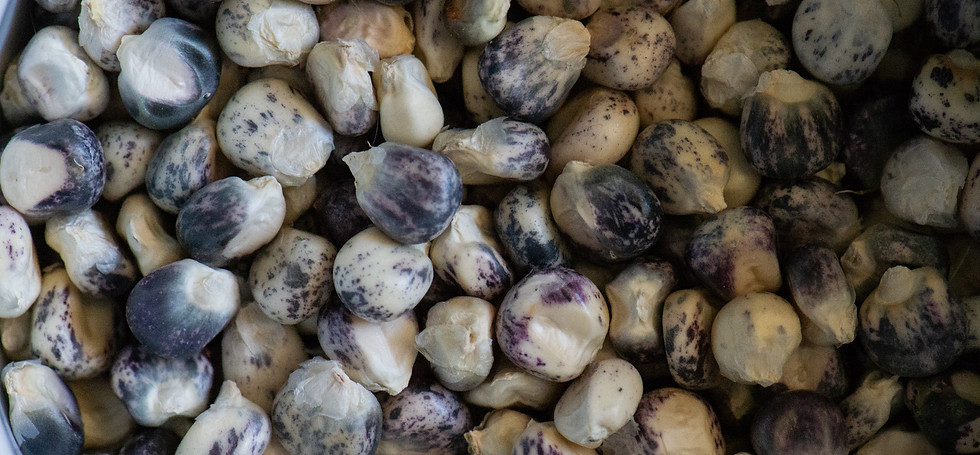
Montana Morado
Developed in Montana, a descendant of both drought tolerant southwest varieties and cold tolerant northern varieties. The result is an incredibly resilient plant that matures in a short growing season. It also has a very soft form of starch that grinds more easily into flour.
OUR
CORN
VARIETIES

IN OUR
GARDENS
IN OUR
GARDENS
IN OUR
LINEAGE
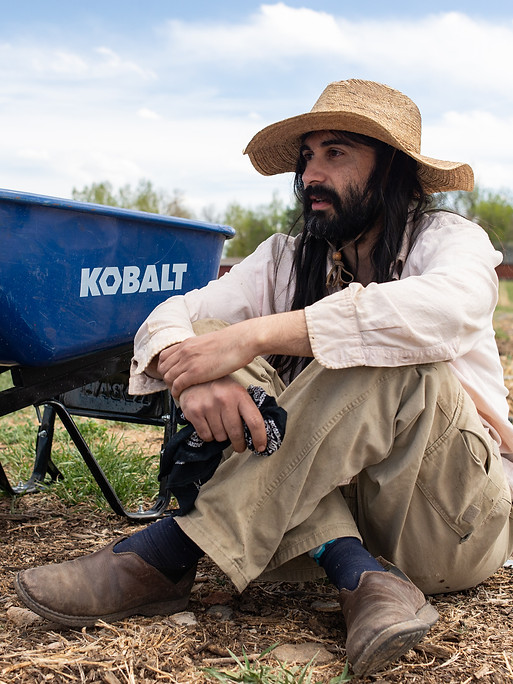
Stevie's History with Corn
Stevie again! I don't know if this is a me thing or something relatable to others, but my strongest ancestral memories of corn gather around the winter holidays. Of course, growing up I ate corn products all year round in the form of bean tostadas and ground beef, "taco seasoning" tacos on storebought yellow corn taco and tostada shells. Sweet corn, buttered excessivley, was also a common staple either when grilling for friends and family, or on the few occasions that we managed a family camping trip. It was always a delight to get that kissed-by-the-flame searing, those grill marks on the thin inner layers of the parchmenty husk and the optimistically yellow kernels bursting with sweet, comforting and toasty juices.
Popcorn at the movie theaters also! We lived next to what we called "the Dollar Show" where you could catch movies that were released in most theaters a few months prior for just a couple bucks. Ask me about my dad's butter and salt regiment at the movie theater sometime if you're lusting for a sodium coma that can only be recessitated if its accompanied by an equally sweet corn-syrupy based soft drink, ideally in 30 ounces or more. (This is not medical advice, I'm a farmer not a doctor, so get down at your own risk.)
Sometimes we would mosy over there just to snag a bag of popcorn and watch a DVD at home, one that we probably received in the mail from Netflix (I'm old, I know). But I digress. Aside from these relatively relatable and common place experiences, as I was saying before, my more ancestral corn memories tended to come around the holidays. Going over to my tia Stella's house for Christmas eve was the tradition, where my grandma Lourdes would make posole, with thick and supple kernels of nixtamalized corn. If ground into flour this corn would create masa, but seeing as it stayed in kernel form, it was called hominy, which is what the whole kernel is called once its been nixtamalized, or cooked in an alkeline solution.
The posole would have hearty chunks of pork, and the broth would be seasoned with red chile. For me, like so many of my abuelita's creations, it was best enjoyed first with a sopapilla for dipping into the rich pork broth, and then after with a second sopa, this time with honey, maybe some butter, to wash down the earthy, smokey, savory deliciousness of the posole.
The other delight we would enjoy around the holiday was tamales. Wrapped, blanketed and steamed in corn husk, a layer of smooth, toasty, subtly sweet masa encased a tender pocket of spicy, tender pork, yet again seasoned with (you guessed it) bright, smokey, earthy red chile.
Cutting into these nourishing bundles of ancestral brilliance is a sensory experience that is seared into some of my earliest familial memories. The breath of steam released when you unbundle a fresh tamale, the gentle resistance of the masa pushing back on your fork, the satisfying, tender shredding of the chile rubbed pork, and the captivating blend of soft, gently sweet, salty, earthy spice of the two main ingredients were two harmonizing voices seranading me with a nostalgic love ballad in every bite.
IN OUR
GARDENS
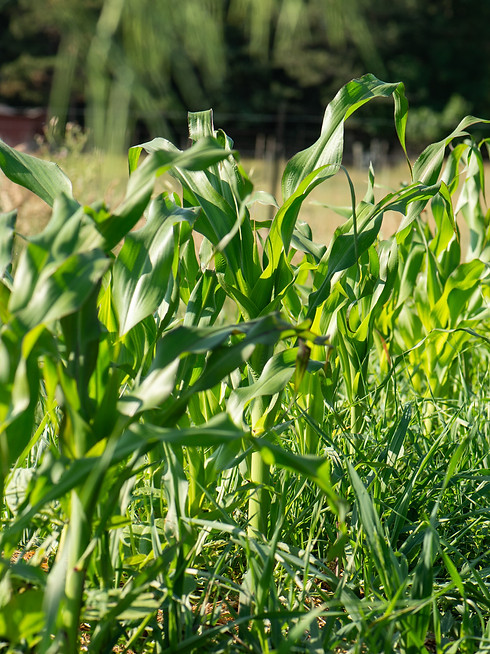
Corn is a member of the grass family, which includes all "true" grains like rice and wheat. Indigenous people domesticated corn around 9000 years ago in what is now southern Mexico.
Along with beans and squash, corn is part of the ancient three sisters interplanting strategy. Its stalks provide support for beans to climb up. Corn generally thrives in rich soil (which beans help to provide), though indigenous people have developed 1000's of varieties that thrive in particular conditions from hot, cool, arid, humid, high and low altitude.
Corn can be planted directly in the ground after the danger of frost has passed, or started in trays and transplanted. Dry corn (like flour corn and popcorn) is allowed to dry on the plant before harvesting, while sweet corn is harvested fresh. Any type of corn seed can be saved by simply allowing it to dry on the plant before storing for next season!
IN OUR
KITCHENS
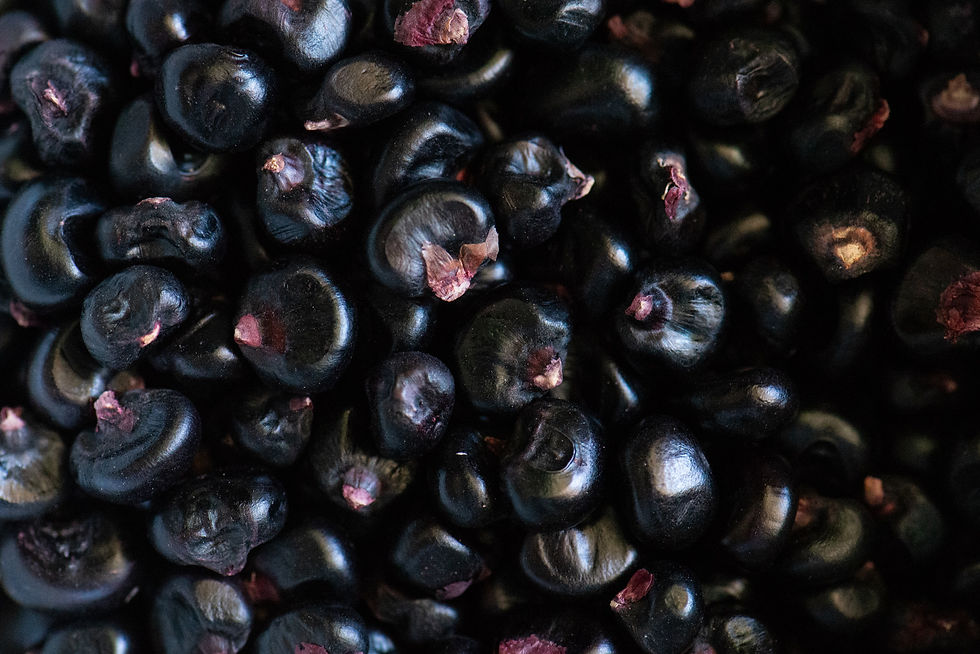
Real talk folks: turning whole dry corn kernels into something delicious is not straightforward in the typical US kitchen that lacks traditional food preparation tools. But if you are curious and committed, I promise there are ways! And they are incredibly rewarding with magical aromas, satisfying flavors, deep nourishment, and connection to an ancient history of love and relationship to land.
So here's the deal:
1) the flour corn we grow is not popcorn, you will be disappointed if you try to pop it lol
2) it can be toasted whole in a dry pan and steeped to make corn tea!
3) if you have a way to grind the dry kernels (relatively affordable options include using a blender, food processor, or hand cranked mill from a latin supermarket), you've opened up a world of cornmeal (omg cornbread), polenta, grits, etc.
4) With some patience, love, and lime (the mineral, not the fruit), aka calcium hydroxide, pickling lime, or "cal" in a latin grocery store--you can open up a world of precolonial flavor and nutrition through the process of nixtamalization. Here's how.
You'll end up with whole, nixtamalized, partially cooked kernels that can be boiled to make hominy for pozole. If you want to take it a step further, you can grind the kernels to make fresh masa, which has literally nourished empires and countless generations of people across the "americas" in the form of tortillas, tamales, pupusas, huaraches, atoles, tlayudas, and more. You can use a blender or food processor, but you will have to add water for it to grind properly. Then the mixture will be too soupy, and you will have to thicken it up again by either letting it dry out for a while, or adding a little masa harina. It's a roundabout process without a traditional metate, but once you've smelled and tasted that first homemade tortilla or tamal or pupusa...damn. You'll never be the same.
