

BEANS
PAGE CONTENTS

OUR
BEAN
VARIETIES
ANASAZI
HISTORY: Heirloom beans originally farmed in the "four corners" - Utah, Colorado, Arizona, and New Mexico - by Puebloans over 7,000 years ago. One of the first crops cultivated in North America.
GROWING: Sustainable and hardy, these beans grow well in the arid American Southwest as they are extremely drought tolerant.
FLAVOR: Mildly sweet, nutty flavor and creamy texture
COOKING: Soups, Chili, and other Mexican dishes, they can serve as a faster cooking alternative to pintos. Seed pods can be cooked whole when harvested young or shelled when mature.
BOLITA
HISTORY: This heirloom cutie was introduced to North America by Spanish settlers who journeyed from other regions of Mexico and was quickly incorporated into Native American cuisine in the Forn Corners region. Known as the "frijol bolita" or "little ball bean".
GROWING: Particularly drought tolerant and known for growing well in tough conditions.
FLAVOR: Prized for its creamy texture and rich, sweet flavor and for being easy on the stomach.
COOKING: Ideal for stews, refried beans, and salads; fast cooking.
CHEROKEE CORNFIELD
HISTORY: Historically grown by the Cherokee people using the three sisters method. A landrace variety: a population of related but diverse genetics that has been grown, harvested, and replanted together for generations.
GROWING: Drought tolerant and particularly suited for use in the three sisters growing method, using corn stalks as a trellis.
FLAVOR: Rich flavor and slightly sweet with a meaty texture.
COOKING: Can be eaten as a snap bean when young or shelled when mature. Dried beans are often used in soups or stews or in traditional Cherokee Bean Bread.
CHEROKEE TRAIL OF TEARS
HISTORY: A vining landrace variety developed by the Cherokee people, these beans are a symbol of resilience. During the 1800s, the federal government violently forced the Cherokee tribe to remove to Oklahoma along a treachorous and deadly march called the Trail of Tears. The Cherokees carried these beans with them.
GROWING: Relatively drought tolerant once established, perfect for use in the three sisters growing method.
FLAVOR: Rich, earthy, slightly sweet flavor.
COOKING: Can be eaten as a snap bean when young or as dry beans when mature. Ideal in black bean soup, stews, chilis, or in traditional Cherokee Bean Bread.
CHEROKEE TAWNY
HISTORY: A rare landrace variety from Michigan, these beans were grown last year in a plot about 100 yards away from ours and have already changed a bit in appearance some from Michigan to here!
GROWING: Drought- and heat-tolerant and hardy, a climbing variety well-suited for use in the three sisters growing mthod.
FLAVOR:
COOKING: Best used in soups and stews.
PINTO
HISTORY: Originally from South and Central America, dating back to over 7000 years ago! An absotlue staple of Southwestern cuisine.
GROWING: Moderately drought-tolerant, are hardy, and can handle dry conditions.
FLAVOR: Mild, earthy, slightly nutty flavor.
COOKING: Famous all-purpose southwestern variety, classic for refried beans! Also amazing in chili, soups, and other Southwestern dishes.
PEREGION
HISTORY: Rare heirloom bean originating from the Pacific Northwest. We were gifted these beautiful beans from a farmer who grew them last year in a plot about 100 yards away from ours!
creamy-textured and great for soups or a replacement for black beans.
GROWING: Highly prolific vigorous growers
FLAVOR: Creamy-textured and nutty-flavored.
COOKING: Great in soups and stews or with winter squashes.
RATTLESNAKE
HISTORY: An heirloom pole bean linked to the Hopi and Cherokee nations in the American Southwest, these beautiful beans have been cultivated for thousands of years.
GROWING: Highly drought tolerant and super prolific, in fact they're called "preacher beans" *possibly* because their high yields gave the preacher something to preach about.
FLAVOR: An intense flavor with a "meaty" sweetness.
COOKING: Climbing variety with purple and green streaked edible pods. As a dry bean, they are similar to pintos but with a more intense flavor.

ANASAZI

BOLITA

CHEROKEE CORNFIELD

CHEROKEE TRAIL OF TEARS

CHEROKEE TAWNY

PINTO

PEREGION

RATTLESNAKE
IN OUR
GARDENS
IN OUR
GARDENS
IN OUR
LINEAGE
.jpeg)
Sam's History with Beans
Any time mom made a ham for dinner, I knew a pot of beans was coming next. My favorite thing was (and still is!) when a hunk of ham would emerge in a spoonful of beans, having freed itself from the ham hock mom had thrown into the pintos to add extra flavor.
Adding a "low on the hog" cut to beans and greens is an Oklahoma staple comfort food. It arose from the merging of cultures of the various peoples who found themselves in that area, from American Southern soul food, begun by enslaved peoples who used the less-than-ideal bits of pig they were given to turn a regular pot of beans into a flavorful, nutritious meal, to the Native Americans who were forcibly removed to the area along the Trail of Tears - a variety, in fact, of beans bares this very name due to being carried to OK along the Trail of Tears by Native families.
In my family, when it was pinto bean night and we asked what was for dinner, we always recieved the same reply: "a thousand things and they're all beans!" It was always (and I mean *always*) accompanied by a pan of Jiffy cornbread (to this day any other cornbread tastes not quite right to me) and cooked spinach from a can. Being autistic I can be weird about leftovers (it’s a texture thing) but I was always so excited about the prospect of leftover beans and cornbread the next day. It almost tasted better the second time around. - Sam
Stevie's History with Beans
When I was young, my parents really struggled with all the pressures, stresses and costs of raising and feeding a family. So like many of us, I was raised on fast food. But sometimes the clouds of highly processed food would part and the light of ancestral nourishment would radiate through, in the humble form of a crock-pot full of pinto beans.
Just beans, and water. Maybe a small dash of salt. It was the kind of set-it-and-forget-it process that my mom could gift her family before leaving for a 12 hour nursing shift. It took me most of my life to realize how beautiful that offering was, because compared to the brain rattling flavor of processed and fast food, to a younger me, the beans in my bowl felt...boring, sadly.
But as I got older I developed methods for pazazzing the hell outta my beans, and I went through some phases, and I'll share a couple of them with you in case you wanna copy my homework.
The earliest ah-ha! was loading them up with a fat dallop of sour cream, a fist full of shredded cheddar, a deluge of Chalula hot sauce, and more cracked pepper than anyone has any business enjoying. Since then, my tastes have matured (just) a bit. I now enjoy my beans with a heaping mound of chopped and roasted green chiles, a proper ration of shredded cheese, and whatever kind of onion you got lying around, again in generous proportions.
Lastly, the tortilla. Or sopapilla. Either will do, but you need one, tbh. If you take the tortilla road, you should set that baddie on your stovetop, either on a hot pan or just straight on the burner, and let the heat give it a little sear, cuz the color is where the flavors at. And boom. Just like that, you're being nourished by the living memory of ancient food ways still practiced and adapted to this day. -Stevie
IN OUR
GARDENS
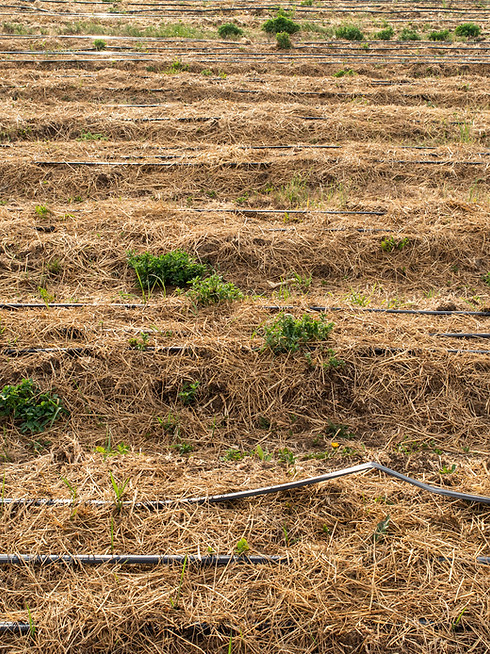
Beans are a member of the legume family, which includes lentils (native to the middle east) and peanuts (native to south america). The beans of turtle island were domesticated 7000-8000 years ago, and are part of the brilliant and ancient 3 sisters interplanting system, along with corn and squash.
In this system, beans climb up the corn stalks and add nutrients to the soil through a unique collaboration with soil bacteria. Beans provide a safe home and food for the bacteria, while the bacteria "fix" nitrogen from the atmosphere and make it available for beans to use.
As a result, beans are one of the best sources of plant protein, and can thrive in and rehabilitate nutrient-poor soils. Plant beans directly in the ground after the chance of frost has passed. "Pole beans" require support (a trellis, cornstalk, or sunflower stalk to climb), while "bush beans" do not. Beans can be harvested fresh in their pods when young, or allowed to dry on the vine. Dry beans can be stored and eaten all year, or saved for planting next season. - Farmer Talia

IN OUR
KITCHENS
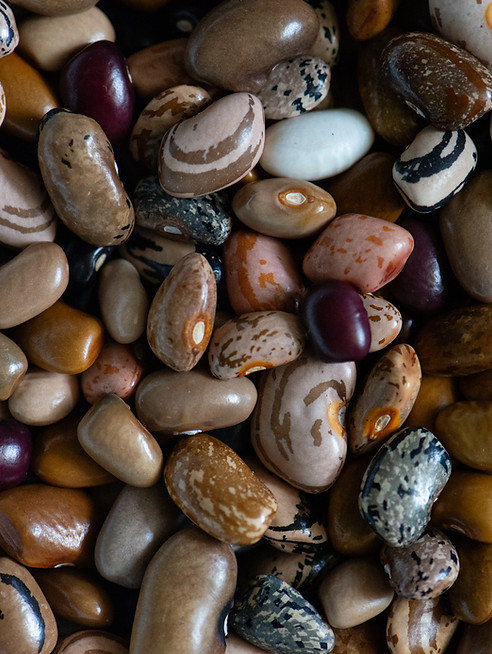
If you've only ever cooked with canned beans before, there's no shame! <3 The industrial food system has been coming for native and traditional foods since before any of us were born. Cooking dry beans can seem tricky or tedious, but we invite you to give it a try---the nuanced flavors, rich textures, and opportunity to connect more deeply with this ancient staple food is worth it.
Start by soaking your dry beans in salted water overnight (you can skip or shorten this step, it will just mean a longer simmering time). Then drain and rinse the beans, picking out any bits of debris or pebbles that escaped from the field. Simmer the beans in salted water with a pinch of baking soda (the higher pH helps soften them faster and more thoroughly). It can take anywhere from 45 min to 2 hours to fully cook the beans, depending on soaking time, bean size, etc. Remember to never add acidic ingredients like vinegar or tomato products until beans are cooked through, otherwise they'll never soften!
Spiff up your basic pot of beans by including any combination of bay leaf, onion, garlic, Mexican oregano, epazote, avocado leaf, whole or ground dried chiles, bacon grease or lard or a whole ass ham hock. Enjoy your luscious, earthy, savory pot of beans by itself or as a gateway to refried beans (alongside Mexican arroz rojo), burritos, bean & cheese pupusas, chili, bean dip, bean brownies...the possibilities are endless and delicious! - Farmer Talia

BEAN
RECIPES
We
.png)
SAM'S HAM & PINTO BEANS
Ingredients
1 lb pinto beans
Leftover ham bone of any kind or store bought ham hocks
Jalapeño (optional)
Salt
Pepper
Sides
Jiffy Cornbread (not optional, loljk)
Much like Stevie's mom, my mother kept her bean recipe fairly basic. Her instructions are:
-Put bone/hock in a big pot, fill it with water, and bring to a boil
-Once it's boiling, add in beans
-Cook for a few hours (we never soaked ours beforehand), adding in water as needed until the end when you want it to thicken.
-Salt, pepper, boom.
Also like Stevie, I've jazzed it up a bit in my old age, sometimes I'll chop a jalapeño in half and throw that in, sometimes I'll chop it, I often add chopped garlic and sometimes a little tomato paste to liven it up.