

SQUASH
OUR
SQUASH
VARIETIES
Baby Blue Hubbard
A miniature version of the classic Blue Hubbard squash, its an all-purpose squash with sweet and nuanced flesh. One of the longest lasting squashes when properly stored, lasting 5-6 months.
Delicata
Reliably sweet and soft flesh. The unique skin is thin enough to eat -- perfect for roasting skin - on slices, or you can halve it longways and stuff the cavity with a delicious filling.
Honey Nut
Think of her as a cuter, sweeter butternut ;)
Seminole
Developed by the Seminole Indians, this variety has a super-hard rind (extra long storage life) and very sweet flesh
Waltham Butternut
An heirloom variety of butternut, it has milder and firmer flesh that is great for absorbing the flavors of curries or playing well in a mix of roasted veggies.
Winter Sweet Kabocha
A Japanese variety with amazingly sweet, chestnutty flesh. The texture is on the drier side, perfect for baked goods or tempura.
IN OUR
GARDENS
IN OUR
GARDENS
IN OUR
LINEAGE
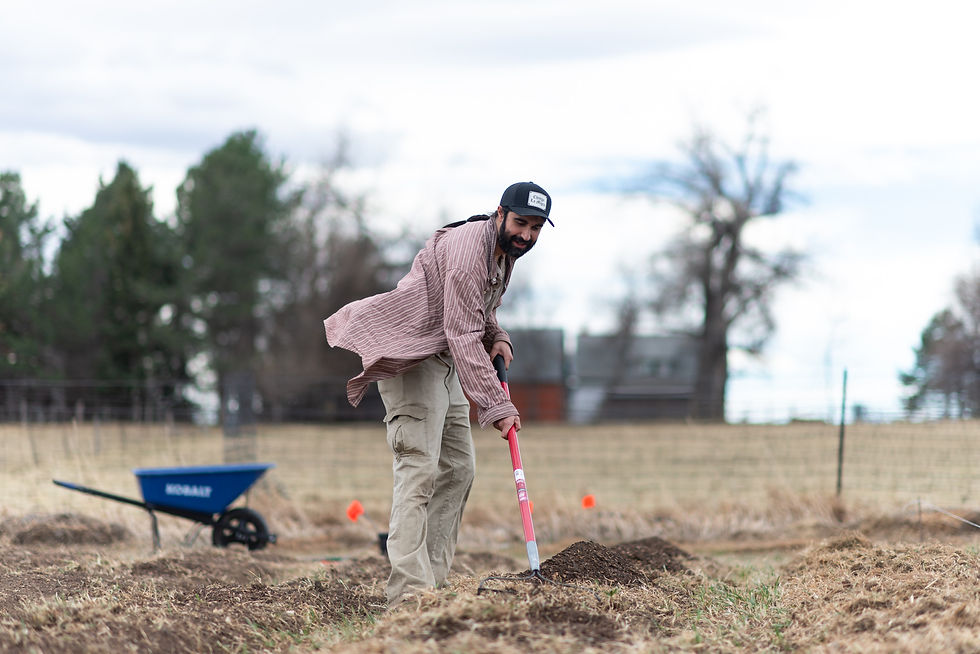
Stevie's History with Squash
The mysterious sister we call squash! Caster of shade and whimsy! Divine relative! If only I would have come to know you better in my youth.
In my home squash was an often overlooked, if not misunderstood relative of the three sister system. On occasion it would wander onto my plate in the humble, yet deeply flavorful form, of calabacitas: a mix of squash, corn, tomatoes, onion, garlic and green chiles (other peppers often substituted). But unfortunately calabacitas was not as frequent a character in the story of my ancestral food ways as some of the other sisters were.
Occasionally my mom would be gifted an oversized zucchini from a gardening comrade (my mom gardened too when I was a kid, but bless her heart, she only grew flowers back then.) This sort of thing must have happened semi frequently, because at a certain point in my youth I have a lot of memories of fresh zucchini bread coming pipin hot off the presses, straight out of a bread tin, straight onto my plate. A couple dabs of butter later, and I’m happy as a clam at high tide. A crispy outer layer of browned crust crunches and pushes back as you bite into it, only to yield to fields of warm, soft, buttery, earthy delight, subtle notes of cinnamon linger with the gentle earthen sweetness of the zuke. These were the humble forms that brought sister squash onto my plate and into my being, but I’m pleased to acknowledge that there’s no lack of warmth and tenderness felt toward this relative, so hopefully we can continue to grow towards each other as my ancestral relations and responsibilities come into clearer focus. I look forward to knowing you better, sister.
IN OUR
GARDENS

Squash is a member of the gourd family, along with cucumbers (native to India) and melons (native to southwest Asia). Both winter and summer squash were domesticated in what is now "central America" around 8,000-10,000 years ago.
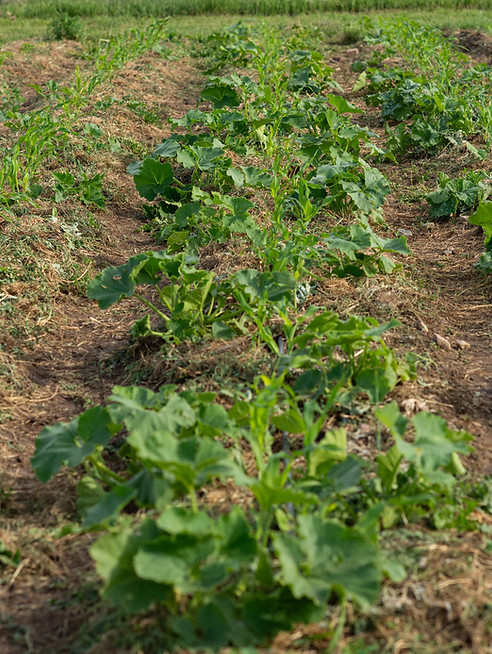
As part of the ancient 3 sisters interplanting tradition, squash's large leaves shade the ground to mitigate soil water loss and weed pressure. Our farm focuses on storeable winter squashes.
They can be seeded directly in the ground after the danger of frost has passed, or transplanted from trays. Harvest winter squash when the vines start dying back, or before the first hard frost. Most squash benefit from curing (sitting in a dry, warm place) for a couple weeks, which results in harder rinds and sweeter flesh. To save seeds, simply scoop 'em out of a mature squash and let them dry before storing for next season!
IN OUR
KITCHENS
I don't even know where to start y'all--squash is everything. She's a sexy main character, a generous supporting actress, she plays well with sweet, savory, spicy, and more.
Whenever I'm getting to know a new variety, I'll do a simple roast first: cut the squash in half (or quarters if she's a big girl). Scoop out the seeds, drizzle some oil all over, and put the cut side down on a baking sheet for an enticing caramelized finish. Roast around 375ish for 30 min to an hour (depending on size). Test for doneness by poking a fork into the skin.
A good ass squash literally needs nothing more than a sprinkle of salt to make you weak at the knees. But you can also take her in so many directions from here: puree into a silky soup, cube and add to a curry or tacos, mash it up and make something sweet (pie, muffins, pancakes, etc). Almost any family of flavors can belong here, for example... {maple syrup, cinnamon, nutmeg, cloves, honey} {yogurt, cream} {lime, cilantro, shallot, ginger, coconut milk} {cumin, chile powder, garlic} {rosemary, sage, olive oil, hazelnuts} {candied nuts and fresh salty cheese}...goddam, what a woman.
